What Defines a Great Tower PC Today?
Choosing the best tower PC means looking beyond a simple list of specifications. A truly modern, workflow-ready model is defined by a combination of key attributes that empower the user, rather than just delivering raw numbers. The machines available demonstrate a clear focus on these critical areas.
This report serves as a guide to navigating the specialized world of tower PCs. While many of the products represent bespoke, professional-grade solutions, a careful look at their descriptions and categorizations reveals which machines are built for which tasks, helping you identify the perfect centerpiece for your next-gen workflow.
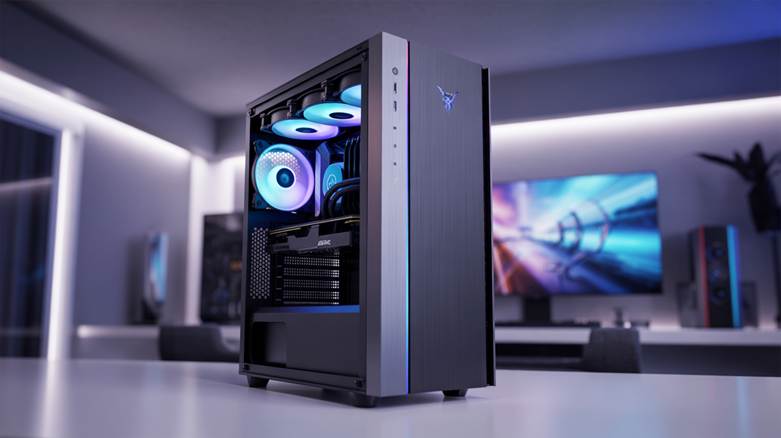
Next-Gen Processing Power
At the core of any powerful PC is its central processing unit (CPU). The catalog features the latest generation of Intel processors, including the Intel Core i5, i7, and i9 models. These processors offer a tiered approach to performance. The Intel Core i9-14900K represents the pinnacle of consumer-grade power, providing a high core count and exceptional speeds ideal for multi-threaded applications like 3D rendering, video encoding, and compiling large codebases. On the other hand, the Intel Xeon processors found in the HPE ProLiant series are designed for a fundamentally different purpose. These are server-grade CPUs, built for reliability, error correction, and managing multiple concurrent tasks over long periods, making them the industry standard for business servers and professional workstations.
Graphics and AI Acceleration
The term "AI Workstation" is not just a marketing label; it signifies a machine purpose-built for the most demanding computational tasks. These PCs are configured with powerful graphics cards (GPUs) and are optimized for machine learning, deep learning, and advanced data analysis. The distinction between a standard desktop and an "AI Workstation" is the focus on GPU-accelerated computing, which is essential for rendering complex graphics, running simulations, or processing vast datasets at high speeds. This specialized hardware ensures that the computer can handle complex algorithms and professional software without bottlenecks, allowing a data scientist or 3D artist to work more efficiently.
Connectivity and Future-Proofing
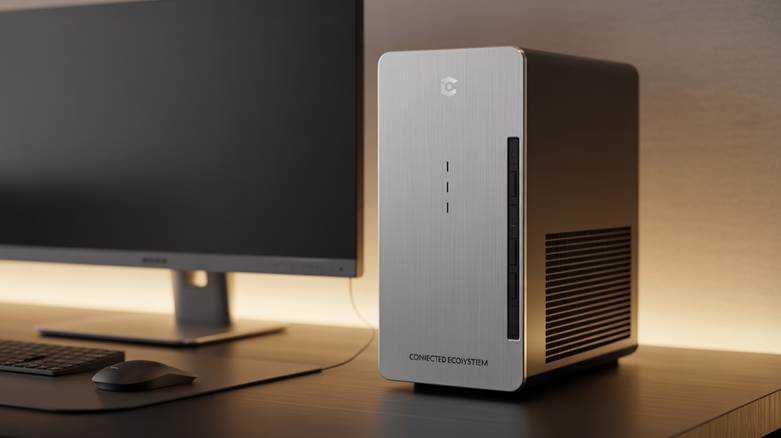
A great modern tower PC must be a seamless part of your connected ecosystem. Key features like Wi-Fi 6, 5G, and 2.5GbE networking are prominently mentioned in the product names. These technologies are not just for fast browsing; they are essential for professional workflows. Wi-Fi 6 provides faster, more stable wireless connections in crowded networks, which is crucial for a shared office or home environment. 2.5GbE, a wired Ethernet standard, delivers data transfer speeds that are two and a half times faster than standard gigabit Ethernet, a significant advantage when transferring large video files, rendering over a network, or backing up critical data. 5G connectivity further adds to the versatility, providing a high-speed mobile network option for remote access or locations without a traditional wired internet connection.
Expandability and Customization
The very form factor of a tower PC is a testament to its long-term value. Unlike more constrained devices, a tower chassis provides ample space for future upgrades. Whether a user needs to add more RAM for multitasking, install an additional hard drive for data storage, or swap out the graphics card for a more powerful model, a tower PC can evolve with their needs. This inherent expandability ensures that a significant hardware investment today can be protected and updated to stay relevant for years to come.
Spotlight: Power and Performance from the Intel Core Series
A standout choice in the catalog is the Intel Core 14th Gen series, specifically the high-end Intel® i9-14900K Desktop AI Workstation. While detailed public specifications are not readily available on the website 4, the product's title and professional focus offer significant insight. This machine is built around the Intel Core i9-14900K, a top-tier processor that provides an exceptional foundation for multi-threaded and single-core applications alike. Its high clock speeds and performance-core architecture make it a powerhouse for tasks ranging from high-resolution video editing and 3D modeling to complex software development and data processing.
The inclusion of "AI Workstation" in the name highlights the system’s primary purpose: to provide dedicated acceleration for artificial intelligence and machine learning workloads. This indicates a configuration that includes a professional-grade graphics card, substantial memory, and a robust power supply, all optimized to handle the intensive, sustained computational demands of an AI researcher or data scientist. The Wi-Fi 6 and 5G connectivity further underscore its role as a machine designed for the modern, professional environment, where seamless high-speed networking is just as important as raw processing power.
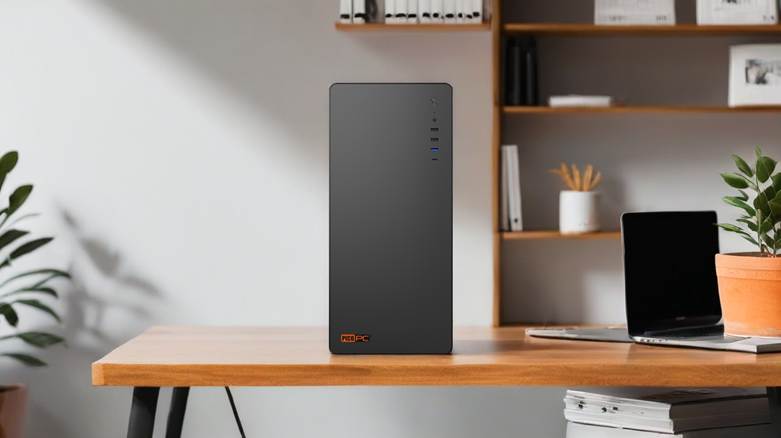
Recommendations: Matching the Command Center to the Task
The catalog is not a single list of comparable computers but rather a collection of highly specialized machines. The key to making the right choice is to match the computer's core purpose to a user's specific workflow.
For the Power Professional: The Intel AI Workstation Series
This category is designed for those whose work revolves around resource-intensive, GPU-accelerated tasks. This includes AI researchers, data scientists, 3D artists, and high-end video editors. The product names clearly indicate their specialized role.2
● Intel® i9-14900K Desktop AI Workstation
● Intel® i7-14700K Desktop AI Workstation
● Intel® i5-14600K Desktop AI Workstation
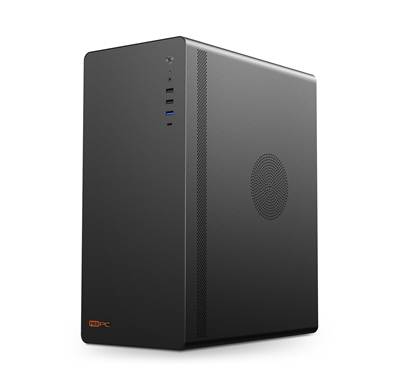
The tiered i5, i7, and i9 processors offer a clear path for scaling performance based on a professional’s budget and workload. These machines are a strategic investment in a user's ability to tackle the most demanding projects. All products in this series require a personalized Request a Quote for pricing and configuration details.
For the Versatile Power User: The Intel Desktop/Tower Series
These are the all-around high-performance machines for users who require significant power for a variety of demanding tasks that are not necessarily focused on AI. This category is suitable for software developers, multi-tasking professionals, and enthusiasts who want a powerful and fast computer for high-end gaming or general computing.
● Intel® i9-14900K 2.5GbE QSFP28 5G Wi-Fi 6 Desktop/Tower
● Intel® i7-14700K 2.5GbE QSFP28 5G Wi-Fi 6 Desktop/Tower
● Intel® i5-14600K 2.5GbE QSFP28 5G Wi-Fi 6 Desktop/Tower
These PCs are defined by their integration of 2.5GbE networking, a key feature for ensuring fast, reliable data transfers over a local network. They offer the same powerful Intel processors as the AI Workstations but without the specialized, performance-tuned configuration for AI-specific tasks.
For the Enterprise: The HPE ProLiant Tower Servers
This is a fundamentally different class of product designed for business and corporate environments. These machines are not for a single user's desktop; they are built to function as dedicated servers for an entire network, managing data, hosting applications, and providing shared resources.
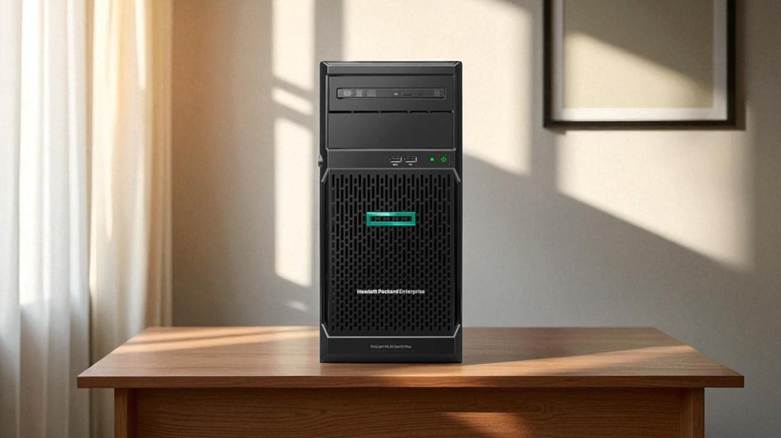
● HPE ProLiant ML110 Gen 10 Intel Xeon 3206R 8 Cores 32GB 4x Bays 550W 4.5U
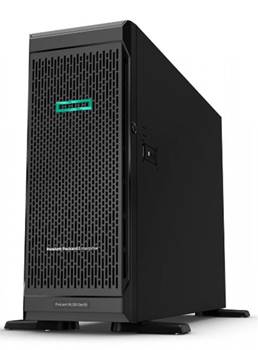
● HPE ProLiant ML350 Gen 10 Xeon Silver 4208 16GB 8x Drive Bays 800W 4U Tower Server
● HPE ProLiant ML30 Gen10 Plus Xeon E-2314 4-core 16GB 4 LFF 350W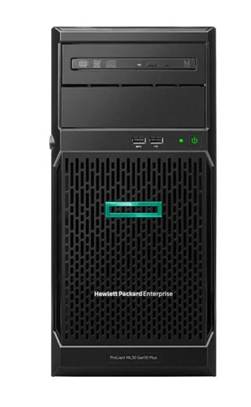
Key differentiators include the use of Intel Xeon processors and the high number of drive bays, which are essential for data storage and redundancy.
Buying Tips: Making the Right Choice
● Budget & Use Case: Think about what you really need. For heavy AI or creative work, go with an AI Workstation. For gaming or coding, the Intel Desktop/Tower series is plenty. Running a business? HPE ProLiant servers are built for that.
● Processor: I’d pick Intel Core for most personal use—it’s fast and flexible. Xeon, on the other hand, is perfect if you need rock-solid reliability for business or servers.
● Future-Proofing: I like tower PCs because they grow with you. Look for Wi-Fi 6, 5G, or 2.5GbE now, and upgrade RAM, storage, or graphics later when you need it.
Final Thoughts: Your Command Center Awaits
Tower PCs remain the most reliable and adaptable choice for professionals, creators, and businesses that demand uncompromising performance. Unlike compact systems or laptops, towers provide the space, power, and expandability to serve as long-term investments, capable of evolving with ever-changing technological needs.
The report shows that today’s best tower PCs are not just about raw specifications; they are about aligning the right machine with the right task. AI Workstations lead the way for professionals dealing with complex, GPU-accelerated workloads, while versatile desktop/tower PCs serve power users who need high-speed connectivity and balanced performance. On the enterprise front, HPE ProLiant servers prove indispensable, offering robust reliability and scalability for organizations managing data-intensive operations.
Ultimately, the choice of tower PC should be guided by purpose. Whether it is powering next-generation AI research, delivering fluid multitasking for a developer, enabling ultra-fast creative workflows, or running as the backbone of a corporate IT network, the right tower PC is less a purchase and more an investment in productivity and future-proof performance. In 2025 and beyond, tower PCs stand as the command centers of innovation—machines built not just for today’s demands, but for tomorrow’s possibilities.
FAQs
1. What is an 'AI Workstation' and who needs one?
An "AI Workstation" is a high-performance computer optimized for machine learning, deep learning, and advanced data analysis. These machines are typically configured with powerful GPUs and a high core count CPU to handle the intensive computational demands of these specialized fields. They are essential for professionals in data science, scientific research, and 3D animation.2
2. What is the difference between an Intel Core processor and an Intel Xeon processor?
Intel Core processors (i5, i7, i9) are generally designed for consumer and prosumer applications, focusing on high single-core and multi-core performance for tasks like gaming, content creation, and general productivity. Intel Xeon processors, by contrast, are server-grade CPUs built for reliability, error-correcting memory support, and multi-core efficiency in sustained, heavy workloads typical of business servers.2
3. Why do some products say 'Request a Quote' instead of listing a price?
Many of the products on the site, particularly the AI Workstations and higher-end models, are part of a business-to-business (B2B) sales model. This allows the company to provide customized solutions and precise, up-to-the-minute pricing based on current component costs and a customer’s specific needs, which is a common practice for professional-grade hardware.2
4. Are these PCs upgradeable?
Yes. The tower form factor is designed for expandability. Users can typically add more RAM, storage drives, and even swap out components like the graphics card or power supply to extend the life and improve the performance of their system over time.
5. What is the benefit of Wi-Fi 6 or 2.5GbE networking?
Wi-Fi 6 provides faster, more stable wireless connectivity in environments with many devices, reducing latency and ensuring a more reliable connection for remote work. 2.5GbE is a wired Ethernet standard that enables two and a half times faster data transfer over a local network, which is critical for professionals who frequently move large files between machines or a network-attached storage (NAS) device.2
6. How do I know which PC is right for my business?
Start by assessing your primary workload. If your business requires a central hub for data management, virtualization, or network resources, an HPE ProLiant tower server is the appropriate choice. If your team members are high-performance users in fields like video production or data science, a configured Intel AI Workstation is the best fit. For all-around power and versatility, the Intel Desktop/Tower series is the ideal solution.



Comments (1)