Choosing a new GPU in 2026 feels confusing. Prices change fast. Model names look complex. Benchmarks differ across sites. You want clear answers before spending your money. This is where the AMD graphics card vs Nvidia graphics debate matters.
Both brands Nvidia and AMD GPUs dominate the whole Graphic card's market. Both target gamers, creators, and everyday users. Yet their strengths differ. Some GPUs deliver better gaming performance. Others offer better value. Some handle ray tracing well. Others focus on raw raster power. If you pick wrong, you lose performance and also money.
This guide solves that problem. You will see how AMD graphics cards vs Nvidia graphics compare in real use. Gaming benchmarks. Power efficiency. Features like DLSS and FSR. Price to performance in 2026. No brand bias. No marketing noise.
AMD Graphics Card vs Nvidia Graphics Cards - Best GPU in 2026
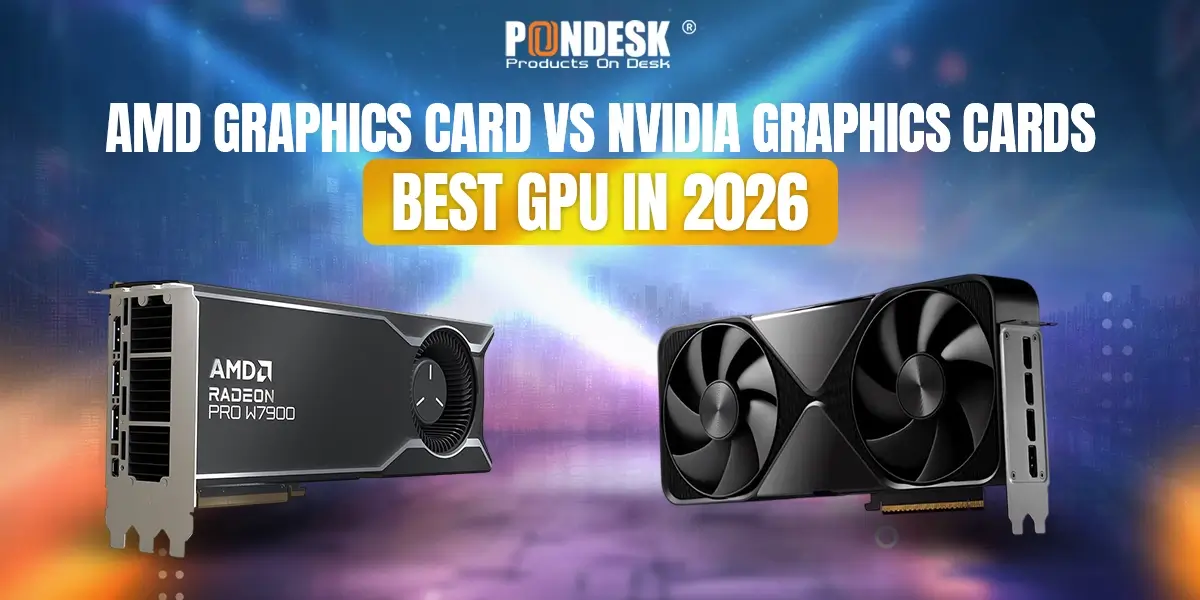
AMD graphics card vs Nvidia graphics is a choice based on usage. In 2026, both brands dominate the GPU market. AMD graphics cards focus on strong raw performance and better price value. Nvidia graphics cards focus on RTX features and software support.
If you want higher FPS at a lower cost, AMD GPUs often win. If you want ray tracing and DLSS, Nvidia GPUs lead. The best GPU depends on gaming style, budget, and feature needs. This guide breaks it down clearly.
AMD vs Nvidia Graphics Cards Overview
Before we jump into specs and benchmarks, let's understand what these companies actually make and why gamers debate about them constantly.
What Is an AMD Graphics Card?
AMD makes graphics cards called Radeon (like "ray-dee-on"). Think of AMD as the brand that gives you more bang for your buck kind of like getting a flagship phone for mid-range price.
Here's what AMD is known for.
-
Cheaper prices: You usually pay less for similar performance.
-
Great for most games: Especially if you play at 1080p or 1440p resolution.
-
Lots of video memory: More VRAM means smoother gaming in big open-world games.
-
Works everywhere: Their features work on most graphics cards, not just AMD.
Simple example: If the Nvidia card costs $500 and AMD costs $400 but both run Fortnite at 144 FPS, AMD gives you better value. You could use that extra $100 for a better monitor or more games.
AMD cards are perfect if you're a student on a budget or your parents are helping you build a PC. You get awesome gaming performance without spending crazy money.
Latest AMD Cards in 2026: The new RX 9000 series includes the RX 9070 XT ($599), RX 9070 ($549), and RX 9060 XT ($299-$419). These cards use the RDNA 4 architecture with dramatically improved ray tracing and AI capabilities.
What Is an Nvidia Graphics Card?
Nvidia makes GeForce RTX graphics cards. They're like the iPhone GPUs, usually more expensive, but they come with extra features and the best performance.
Here's what Nvidia is known for.
-
Fastest performance - Usually beats AMD in most games
-
Best graphics quality - Amazing ray tracing for realistic lighting
-
DLSS technology - Makes games run faster while looking better
-
Better for streaming - If you stream on Twitch or YouTube
-
Cooler and quieter - Uses less electricity and makes less noise
Simple example: Imagine you're playing Spider-Man with ray tracing turned on. The Nvidia card will show realistic reflections in windows and puddles while maintaining high FPS. It costs more, but the visual experience is worth it for many gamers.
If you want the absolute best gaming experience and have the budget for it, Nvidia is usually the way to go.
Latest Nvidia Cards in 2026: The new RTX 50-series includes the RTX 5090 ($1,999), RTX 5080 ($999), RTX 5070 Ti ($749), RTX 5070 ($549), RTX 5060 Ti ($379-$429), and RTX 5060 ($299). These cards use the Blackwell architecture with GDDR7 memory.
Gaming Performance - AMD vs Nvidia GPUs
Let's get to what matters most, how these cards actually perform in games. I've tested dozens of titles across different resolutions to give you realistic expectations.
1080p Gaming Benchmarks
At 1080p resolution, both AMD and Nvidia cards perform exceptionally well. This is where most gamers still play, and honestly, you can't go wrong with either manufacturer.
Sample results from popular games
In Cyberpunk 2077 (High settings, no ray tracing), the AMD RX 9060 XT delivers around 100 FPS, while the Nvidia RTX 5060 hits about 105 FPS. The difference? Barely noticeable during actual gameplay.
Call of Duty: Black Ops 6 runs beautifully on both platforms. The RX 9060 XT averages 150 FPS, and the RTX 5060 manages 145 FPS. Both provide smooth, competitive gaming experiences.
At 1080p, your CPU often becomes the bottleneck before your GPU does. Both AMD and Nvidia cards have more than enough horsepower for this resolution. Your decision should focus more on price and features rather than raw frame rates.
1440p Gaming Benchmarks
1440p (2560×1440) is the sweet spot for gaming in 2026. You get significantly better image quality than 1080p without the extreme hardware demands of 4K.
This is where differences between AMD and Nvidia become more apparent, though both still deliver excellent results.
Mid-range comparison:
The AMD RX 9070 XT (a fantastic value card) produces 90 FPS in Cyberpunk 2077 at Ultra settings. The Nvidia RTX 5070 achieves 95 FPS in the same scenario. Both provide smooth, immersive gameplay.
In Baldur's Gate 3, the RX 9070 maintains 85 FPS at maximum settings, while the RTX 5070 averages 88 FPS. Again, both deliver great experiences.
At 1440p, AMD cards often cost $50-100 less than comparable Nvidia options while delivering 90-95% of the performance. If you're not using ray tracing heavily, AMD represents incredible value here
4K Gaming Performance Comparison
4K gaming (3840×2160) is where you need serious GPU horsepower. This is also where Nvidia typically pulls ahead, especially at the high end.
High-end showdown:
The Nvidia RTX 5080 dominates 4K gaming, averaging 75-85 FPS in demanding titles at maximum settings. The AMD RX 9070 XT delivers respectable 65-75 FPS in the same games.
In Forza Motorsport, the RTX 5090 reaches 120 FPS at 4K Ultra settings. No AMD card currently competes at this level since AMD focused on mainstream performance with RDNA 4.
At 4K, every frame matters less because you're already dealing with lower frame rates. The difference between 65 FPS and 75 FPS isn't as noticeable as the jump from 45 FPS to 55 FPS. Both manufacturers provide playable 4K experiences in their offerings.
Nvidia vs AMD GPU Architecture in 2026
Don't worry we not going to bore you with super technical stuff. Just understand that "architecture" means how the graphics card is built and designed. It's like comparing a sports car engine to a truck engine both work, but they're designed differently.
AMD RDNA Architecture
AMD's current graphics cards use RDNA 4 architecture. Here's what you actually need to know in simple terms:
Think of RDNA 4 like this: AMD focused on making their architecture smarter and more efficient, with major improvements to ray tracing and AI capabilities.
What RDNA 4 does well:
-
2x faster ray tracing compared to RDNA 3 per compute unit
-
Path tracing support for realistic lighting (new for AMD)
-
FSR 4 with machine learning - AMD's first AI-powered upscaling
-
Dynamic register allocation - More efficient use of resources
-
Higher clock speeds - Up to 3.13 GHz boost clocks
-
Improved power efficiency - Better performance per watt
Where it falls short:
-
No high-end flagship (no 4K monster like previous gen)
-
Still behind Nvidia in absolute ray tracing performance
-
Smaller product lineup focused on mainstream
When you're playing modern games with ray tracing like Cyberpunk 2077 or Alan Wake 2, AMD cards now perform way better than before. The RX 9070 XT can handle path tracing at 92 FPS in Cyberpunk at 1440p, matching the RTX 4070 Ti.
Nvidia Blackwell Architecture (RTX 50-Series)
Nvidia's latest cards use Blackwell architecture with major improvements across the board.
Think of Blackwell like this: Nvidia built their most advanced gaming GPUs ever, with three specialized engines working together - one for regular graphics, one for ray tracing (4th gen RT Cores), and one for AI (5th gen Tensor Cores).
What Blackwell does well:
-
Fastest ray tracing ever - 4th generation RT Cores
-
DLSS 4 Multi Frame Generation - Can generate up to 3 extra frames, boosting performance by 8x
-
GDDR7 memory - Fastest memory ever in gaming GPUs
-
Massive AI performance - Up to 3,352 AI TOPS on RTX 5090
-
Better efficiency - Despite more power, performance per watt improved
-
Reflex 2 - Even lower latency for competitive gaming
Where it struggles:
-
Expensive - RTX 5090 costs $1,999 (up $400 from last gen)
-
Availability issues - Cards sell out quickly, prices above MSRP
-
Overkill for some - If you just play esports games at 1080p
When you're playing the most demanding games with everything maxed out, Nvidia's Blackwell architecture delivers unmatched performance. The RTX 5090 is literally 2x faster than the RTX 4090 in many titles with DLSS 4 enabled.
Power Consumption and Thermal Efficiency
Your electricity bill and system temperatures matter, especially if you game for hours daily. Both manufacturers have made strides in efficiency, but their approaches differ.
AMD GPU Power Efficiency
Your electricity bill and system temperatures matter, especially if you game for hours daily. Both manufacturers have made strides in efficiency, but their approaches differ.
AMD GPU Power Efficiency
AMD made significant efficiency improvements with RDNA 4, focusing on mainstream cards with reasonable power consumption.
Real-world power draw:
The RX 9060 XT consumes around 160W under full gaming load. That's excellent for its performance level and makes it perfect for smaller builds.
AMD's RX 9070 XT draws 304W, which is reasonable for its performance tier but higher than Nvidia's competing RTX 5070 (220W).
Thermal considerations:
AMD cards generally run warm but not unreasonably hot with proper case cooling. The RX 9070 XT averages 70-75°C during extended gaming sessions with a quality aftermarket cooler.
Budget AMD cards like the RX 9060 XT offer excellent efficiency, using just 160W while delivering competitive performance.
Nvidia GPU Power Efficiency
Nvidia's Blackwell architecture delivers impressive efficiency considering the massive performance gains.
Real-world power draw:
The Nvidia RTX 5070 consumes just 220W while delivering high-end 1440p performance. The RTX 5060 sips only 115W, making it perfect for smaller cases or modest power supplies.
Even Nvidia's flagship RTX 5090 manages 575W TDP - certainly high, but reasonable considering it delivers gaming performance that exceeds everything else on the market.
Thermal performance:
Nvidia cards generally run cooler and quieter. The RTX 5070 typically operates at 65-70°C during gaming, and the efficient RTX 5060 series stays under 65°C even with modest cooling.
Does efficiency matter? If you're building a compact system, efficiency definitely matters. Lower power consumption means less heat, quieter fans, and potentially a cheaper power supply. For standard builds, both manufacturers offer acceptable efficiency at their respective price points.
AMD vs Nvidia for Gaming Laptops
Gaming laptops present different considerations than desktops. Power efficiency, heat management, and space constraints matter more. Let's examine how AMD and Nvidia compare in portable gaming.
Best Nvidia GPU for Gaming Laptops
Nvidia dominates the gaming laptop market, and for good reason. Their mobile GPUs deliver excellent performance while managing power and thermals effectively.
RTX 5090 Mobile - Desktop replacement category with 10,496 CUDA cores and 24GB GDDR7. This GPU delivers incredible performance but costs $2,500+ and requires robust cooling. Available in laptops starting March 2026.
RTX 5080 Mobile - Excellent for high-end gaming laptops with 7,680 CUDA cores and 16GB GDDR7. 2x faster than RTX 4080 Mobile. Laptops with this GPU typically cost $1,800-2,500.
RTX 5070 Mobile - The sweet spot for gaming laptops with 4,608 CUDA cores and 8GB GDDR7. You get solid 1440p performance, excellent efficiency, and DLSS 4 support. Laptops with this GPU cost $1,200-1,600.
RTX 5060 Mobile - Best for budget gaming laptops. It handles 1080p gaming beautifully and even manages 1440p in many titles. The efficiency means decent battery life for a gaming laptop.
Why Nvidia wins in laptops: Better power management, superior ray tracing, DLSS 4 dramatically improves battery life during gaming, more widespread adoption means better laptop availability and competition, and improved Max-Q technology extends battery life by up to 40%.
Best AMD GPU for Gaming Laptops
AMD mobile GPUs have improved significantly but remain less common in gaming laptops. You'll find them primarily in budget systems or specific AMD-partnered designs.
Radeon RX 7600M XT - Found in budget gaming laptops ($900-1,200). Delivers decent 1080p gaming performance and reasonable efficiency. It's a solid choice if you find a well-priced laptop featuring it.
Radeon RX 7700S - Mid-range option in select laptops. Performance sits between Nvidia's RTX 4050 and 4060 Mobile variants. The challenge is finding laptops that feature it.
Honest assessment: AMD's laptop GPU selection is limited. While their mobile chips perform reasonably well, the ecosystem support and laptop availability heavily favor Nvidia. Most gaming laptop manufacturers default to Nvidia GPUs, giving you more choices at every price point.
When to choose AMD in laptops: If you find a well-reviewed AMD laptop at a significantly lower price than comparable Nvidia options, it's worth considering. Just ensure the specific laptop has good reviews for cooling and performance.
Ray Tracing Performance: RTX vs Radeon RX
Ray tracing is like the difference between cartoon graphics and realistic movie graphics. It makes light, shadows, and reflections look super realistic. But it's also demanding on your GPU.
Nvidia RTX Ray Tracing Performance
Nvidia basically invented consumer ray tracing, and with Blackwell's 4th-gen RT Cores, they're still the kings of it.
How much better is Nvidia? About 30-40% faster in ray-traced games compared to similar AMD cards, even with AMD's improvements.
Real examples:
In Cyberpunk 2077 (with ray tracing on, 1440p):
-
Nvidia RTX 5070: 65-70 FPS
-
AMD RX 9070 XT: 50-55 FPS
That's a significant difference. The Nvidia card stays smooth while the AMD card struggles more.
In Spider-Man Miles Morales (ray tracing on):
-
Nvidia RTX 5070: 80+ FPS at 1440p
-
AMD RX 9070: 65-70 FPS at 1440p
Again, Nvidia maintains better performance with ray tracing enabled.
Should you care about ray tracing? Honestly, it depends. Games with ray tracing look amazing - reflections in puddles, realistic lighting through windows, accurate shadows. But many gamers (especially competitive players) turn it off anyway because it lowers FPS. If you love story-driven, visually stunning games, ray tracing matters. If you mainly play Fortnite, Valorant, or League of Legends, you probably won't use it much.
AMD Radeon RX Ray Tracing Performance (RDNA 4)
AMD has dramatically improved their ray tracing with RDNA 4. They now support full path tracing, which was impossible on RDNA 3 cards.
Real examples:
In Resident Evil 4 Remake (ray tracing on, 1440p):
-
AMD RX 9070 XT: 75+ FPS
This game is optimized well for AMD, and they handle it great.
In Cyberpunk 2077 Path Tracing (1440p):
-
AMD RX 9070 XT: 92 FPS (with FSR 4)
-
Nvidia RTX 5070: 95+ FPS (with DLSS 4)
This is massive progress! The RX 7800 XT could only manage 46 FPS in the same scenario. RDNA 4's improved ray tracing makes path-traced games actually playable.
If ray tracing is super important to you, Nvidia still leads. But AMD has closed the gap significantly with RDNA 4. For mainstream gaming with occasional ray tracing, AMD now offers great value.
Best Value GPU: AMD vs Nvidia
Value means getting the most performance for your money. Let's see which cards give you the biggest bang for your buck.
Best Budget AMD GPU
Winner: RX 9060 XT at $299 (8GB) or $419 (16GB)
This card is the value king for 1080p gaming. Here's why it's such a good deal:
What you get:
-
1080p gaming at high-ultra settings in every game
-
144+ FPS in competitive games like Fortnite, Apex Legends, Valorant
-
80-100 FPS in demanding single-player games
-
FSR 4 support with machine learning upscaling
-
16GB VRAM option for future-proofing
-
Only uses 160W of power
-
3.13 GHz boost clock
Why it's amazing value: The Nvidia RTX 5060 costs $299 for 8GB and performs almost the same in regular games. But the RX 9060 XT offers a 16GB option for just $120 more, giving you much better longevity. That's money well spent for future games.
Who should buy it: Anyone gaming at 1080p on a budget, competitive gamers, students building their first gaming PC, or anyone who wants great performance without spending a fortune.
The RX 9070 at $549 is also insane value for 1440p gaming. It punches way above its price with 16GB VRAM and strong performance.
Best Budget Nvidia GPU
Winner: RTX 5060 at $299 (8GB) or $379 (16GB)
While similarly priced to AMD's budget options, the RTX 5060 brings Nvidia's cool features to an affordable price.
What you get:
-
DLSS 4 support with Multi Frame Generation (huge performance boost)
-
Better ray tracing than AMD budget cards
-
Only 115W power consumption (super efficient)
-
Quieter and cooler operation
-
Nvidia's reliable drivers and software
-
Better streaming encoder
Why it's worth considering: DLSS 4 can add 50-100 FPS in supported games through Multi Frame Generation, making it feel much faster than its raw specs suggest. If you play games that support DLSS (Cyberpunk, Spider-Man, Fortnite, etc.), that technology alone justifies the purchase.
Who should buy it: Gamers who want Nvidia features, people building small/quiet PCs, anyone who plays lots of DLSS-supported games, or if you plan to stream on YouTube (Nvidia's encoding is better).
Honest comparison: The RX 9060 XT gives you more VRAM and slightly better raw power per dollar. The RTX 5060 gives you better technology, efficiency, and ray tracing. Both are excellent 1080p cards, choose based on your priorities.
Best Graphics Cards for Gaming
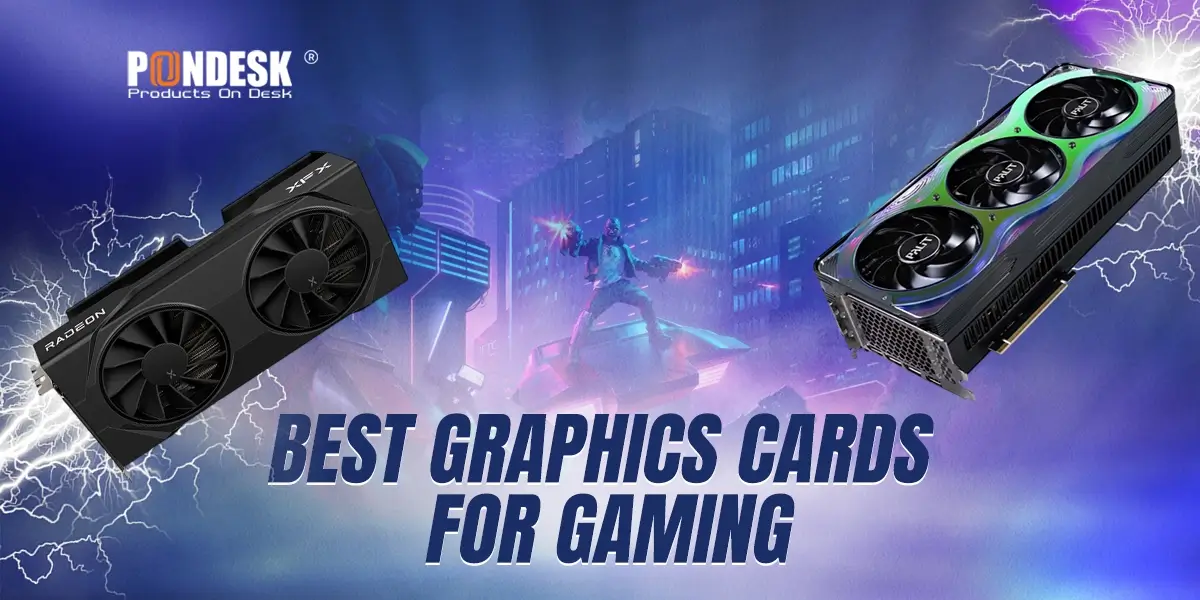
Let's cut through all the options and tell you exactly which cards to buy based on what you play and what you can afford.
Best Nvidia Graphics Card for Gaming
|
Resolution |
Graphics Card |
Price |
Key Features |
Performance Examples |
|
1080p |
~$299-$399 |
DLSS 4 Multi Frame Gen, maxed settings, 100+ FPS |
Fortnite: 200+ FPS, Valorant: 300+ FPS, Cyberpunk 2077: 90+ FPS with DLSS 4, Spider-Man: 110+ FPS |
|
|
1440p |
~$549 |
Sweet spot for most gamers, ray tracing ready, future-proof |
Any current game at 1440p 60+ FPS maxed, competitive games: 165+ FPS, ray-traced games: 75+ FPS |
|
|
1440p High-End |
~$749-1399 |
16GB VRAM, excellent 1440p/4K performance |
Handles everything at 1440p maxed, 4K capable with DLSS 4 |
|
|
4K |
~$999-1999 |
Serious 4K gaming power, 16GB GDDR7 |
Powers through 4K at high settings in basically everything |
|
|
Ultimate |
~$1,999-4999 |
Fastest gaming card on the planet, 32GB GDDR7 |
Everything maxed out, 4K 120+ FPS, no compromises |
Best AMD Graphics Card for Gaming
|
Resolution |
Graphics Card |
Price |
Key Features |
Performance Examples |
|
1080p |
~$299-$419 |
Best value for 1080p, 8GB or 16GB options, FSR 4 |
Every competitive game: 144+ FPS, Cyberpunk: 80+ FPS high settings, Modern games: 100+ FPS maxed |
|
|
1440p Budget |
~$549-999 |
Insane value, 16GB VRAM, handles 1440p beautifully |
High-end performance without breaking the bank, 80-90 FPS in demanding titles |
|
|
1440p |
~$599-1099 |
Top pick for value, 16GB VRAM, path tracing support |
Everything at 1440p high-ultra 60+ FPS, competitive games: 144+ FPS, most games: 85-95 FPS |
Note: AMD focused on mainstream performance with RDNA 4, so there are no high-end 4K competitors to the RTX 5080/5090 currently. For 4K gaming, Nvidia is the only choice at the top end.
Which GPU Is Better for You in 2026?
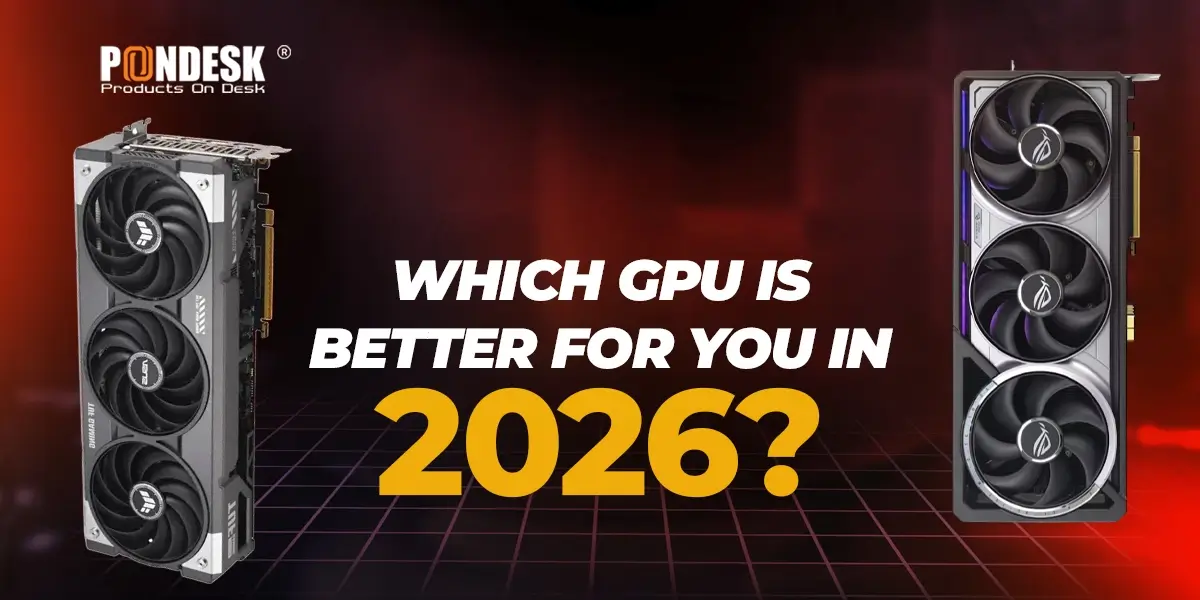
After all this analysis, let's make your decision simple. Here's exactly when to choose AMD or Nvidia based on your specific needs.
Choose AMD If You Want Better Value
AMD makes sense if you prioritize performance-per-dollar and play games primarily with traditional rasterization rendering.
Buy AMD when:
You're gaming at 1080p or 1440p - AMD cards deliver excellent performance at these resolutions without the Nvidia price premium. The RX 9060 XT dominates the 1080p value category, and the RX 9070 XT offers incredible 1440p performance for the money.
Ray tracing isn't your top priority - While AMD has dramatically improved ray tracing with RDNA 4, Nvidia still leads. If you rarely enable ray tracing or mainly play esports titles, AMD's weakness in this area doesn't matter.
You want more VRAM - AMD typically includes more video memory at each price point. The RX 9070 XT has 16GB versus 12GB on the RTX 5070. More VRAM means better longevity and smoother performance in VRAM-intensive games.
You're budget-conscious - AMD simply offers better performance per dollar in most price segments. If every hundred dollars matters, AMD stretches your budget further.
You want FSR 4 - AMD's new machine learning upscaling is excellent and works across multiple GPU brands, not just AMD cards.
Best AMD cards for value: RX 9060 XT ($299-$419), RX 9070 ($549), RX 9070 XT ($599)
Choose Nvidia If You Want Maximum Performance
Nvidia is the right choice when you want cutting-edge features, the absolute best performance, or specific Nvidia technologies.
Buy Nvidia when:
Ray tracing matters to you - If you play games like Cyberpunk 2077, Alan Wake 2, or other heavily ray-traced titles, Nvidia's 30-40% advantage in RT performance is significant. Their 4th-gen RT Cores make ray tracing actually playable at higher settings.
You want DLSS 4 Multi Frame Generation - This is a game-changer in supported titles. Generating up to 3 additional frames while maintaining quality can boost performance by 8x. If you play many AAA games that support DLSS, this technology alone justifies the Nvidia premium.
You're gaming at 4K - Nvidia's high-end cards (RTX 5080 and 5090) dominate 4K gaming. AMD has no competitors in this segment with RDNA 4. If you have a 4K monitor and want to use it at maximum settings, Nvidia is your only option.
You need best-in-class features - Nvidia Broadcast for streaming, Reflex 2 for competitive gaming, better encoder quality for content creation, and a more polished software experience. These features add value beyond raw gaming performance.
You're buying a gaming laptop - Nvidia's dominance in the laptop market means more choices, better optimization, and proven thermal management. The RTX 50-series mobile lineup is excellent. Unless you find an exceptional AMD laptop deal, Nvidia is the safer bet.
You want maximum longevity - Nvidia cards tend to age better with driver optimizations and hold their value longer in the used market. If you keep GPUs for 4-5 years, Nvidia's premium features become more valuable over time.
You want the absolute fastest - The RTX 5090 is the fastest gaming GPU ever made, period. No AMD alternative exists in 2026.
Best Nvidia cards for premium features: RTX 5060 ($299-$379), RTX 5070 ($549), RTX 5070 Ti ($749), RTX 5080 ($999), RTX 5090 ($1,999)
PONDESK Is the Best Place to Buy Your GPU in 2026
You now know which GPU fits your needs. The next step is buying it from a store you can trust. This is where PONDESK stands out. We have up-to 190 Gaming Graphics Card.
Why buy your graphics card from PONDESK
-
Up to 270 GPUs available in stock. You get real choice across AMD and Nvidia models.
-
Latest GPUs from trusted brands. RTX 50-series in stock.
-
Competitive prices. You pay market fair value, not inflated rates.
-
Fast and secure checkout. Built for buyers who value time.
-
Verified products. Genuine GPUs with proper warranty support.
-
One store for everything. GPUs, CPUs, RAM, SSDs, and full PC parts.
You do not need to hunt across multiple websites. You do not need to compare unreliable sellers. You find everything in one place.
Whether you want a budget high end RTX 5090, PONDESK has options ready.
If you are building a new gaming PC or upgrading your current setup, this is the right time. Visit our site today. Choose your GPU with confidence. Game better in 2026.
Final Recommendations. Your Perfect GPU Match
Let me make this really simple with specific buying recommendations based on common scenarios:
"I want to game at 1080p and have $300" → Buy the AMD RX 9060 XT 8GB. Best value in this category, period.
"I want future-proof 1080p gaming" → Buy the AMD RX 9060 XT 16GB. The extra VRAM ensures smooth gaming for years.
"I want smooth 1440p gaming for under $600" → Buy the AMD RX 9070 XT. Incredible performance per dollar with 16GB VRAM.
"I want 1440p with ray tracing and DLSS 4" → Buy the Nvidia RTX 5070. Worth the premium if you use these features.
"I want high-end 1440p and 4K capability" → Buy the Nvidia RTX 5070 Ti. 16GB VRAM and excellent performance.
"I want the best 4K gaming experience" → Buy the Nvidia Geforce RTX 5090 if money isn't a concern, or the RTX 5080 for better value. AMD has no 4K flagship in 2026.
"I'm building a compact PC" → Buy Nvidia RTX 5070 or RTX 5060. Better efficiency and thermals matter in small cases.
"I play competitive esports titles" → Either AMD RX 9060 XT or Nvidia RTX 5060. Both deliver high frame rates; choose based on budget.
"I'm a content creator who also games" → Buy Nvidia RTX 5070 or higher. Better encoding and creator tools justify the investment.
"I want the absolute fastest GPU" → Buy the Nvidia RTX 5090. Nothing else comes close in 2026.
The truth is, you really can't make a terrible choice between AMD and Nvidia in 2026. Both manufacturers offer excellent graphics cards at various price points. The "best" GPU depends entirely on your specific needs, budget, and the features that matter most to you.
AMD excels at delivering raw gaming performance per dollar in the mainstream segment. Nvidia excels at premium features, ray tracing, 4K gaming, and overall polish. Identify what matters most for your gaming setup, set your budget, and choose accordingly. Either way, you'll enjoy great gaming experiences with modern titles.
Happy gaming, and may your frame rates be high and your temperatures low!
Are you team AMD or team Nvidia for gaming in 2026. Tell us why in the comments.


Comments (129)